Skip to contentThe Volcano
Circle
Explore the circleMapStoriesAbout
The Volcano Circle
DestinationsMapStoriesAbout
© 2026 The Volcano Circle
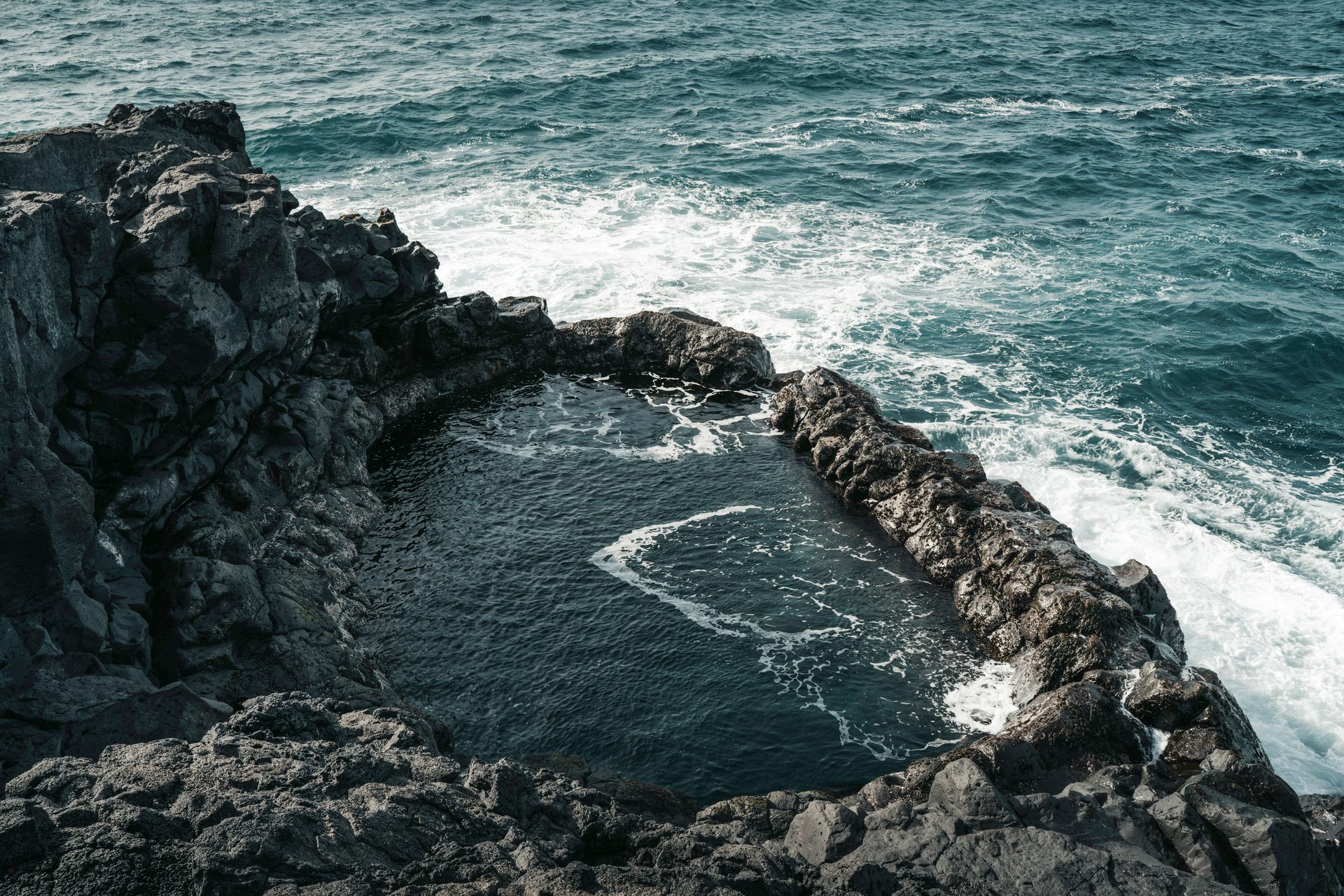
Brimketill lava rock pool on the Atlantic coast
  1. Home
  2. Destinations
  3. Brimketill
Stop 07

Brimketill

Brimketill is a natural lava rock pool on the Reykjanes Peninsula, where North Atlantic waves surge over the lava coastline. It’s free to visit, with a car park and viewing platform just a short walk away. Allow around 20–30 minutes and stay within the designated viewing area.

All places Route map

At a glance

Accessibility
Not wheelchair-accessible
Family-friendly
Suitable for children with close supervision
Time needed
20–30 minutes
Walking difficulty
Easy
Facilities
Small free car park, dedicated viewing platform
Seasonality
Year-round weather-permitting

Brimketill

  1. 01What Exactly Is Brimketill?
  2. 02How Was Brimketill Formed?
  3. 03Brimketill is Also Called Oddnýjarlaug
  4. 04What Can You See From the Brimketill Viewing Platform?
  5. 05Can You Swim in Brimketill?
  6. 06Visiting Brimketill Throughout the Year
  7. 07Places to Visit Near Brimketill
  8. 08Before you set off
  9. 09How to Get to Brimketill Lava Rock Pool
  10. 10Parking and Walking to the Brimketill Viewpoint
  11. 11Where Does Brimketill Fit on the Volcano Circle?
  12. 12Route map
  13. 13Frequently asked questions
  14. 14Next stops.

Brimketill is a natural lava rock pool on the southern coast of the Reykjanes Peninsula, just west of Grindavík. Here, Atlantic waves surge over the dark lava coastline and fill a pool carved into the rock over time.

Although Brimketill is a relatively quick stop, there’s more to know before you visit. This guide covers its formation and folklore, what to expect, how to get there, and how to visit safely.

What Exactly Is Brimketill?

Brimketill is a natural pool carved into the lava coastline west of Grindavík. Unlike the hot springs and geothermal pools found elsewhere in Iceland, Brimketill contains cold seawater and is shaped by the ocean. The name roughly translates as “whitewater cauldron”, referring to the foaming seawater that surges into the rocky pool. The effect is especially noticeable when waves are stronger.

Brimketill is located along Road 425 and is part of the Reykjanes UNESCO Global Geopark. A viewing platform overlooks the pool, so you can see it without climbing onto the surrounding lava rocks.

How Was Brimketill Formed?

Brimketill was formed by marine erosion along the lava coastline. The surrounding basaltic lava contains cracks and fractures where seawater can enter.

As waves repeatedly hit the coast, water and compressed air force their way into these cracks. Waves can also carry loose rocks that scrape and wear away the basalt. During colder conditions, water that freezes inside cracks can expand and widen them. Over time, these processes removed sections of the rock and created hollows in the lava, including the pool you see today.

The lava around Brimketill likely dates from the Reykjanes Fires of around 1210–1240. So, while volcanic activity created the lava field, the ocean carved Brimketill itself over time.

Brimketill is Also Called Oddnýjarlaug

Brimketill has also been known as Oddnýjarlaug, meaning "Oddný's Pool". The old name comes from an Icelandic folk tale about a giantess or night troll named Oddný.

According to the story, Oddný lived nearby with her husband, Hróar, and their son, Sölvi. One night, she travelled to the coast to collect a whale carcass. On her way home, she stopped to rest and bathe in Brimketill.

In Icelandic folklore, trolls were said to travel at night because sunlight could turn them to stone. Oddný stayed too long and was caught by the rising sun before reaching home. She was believed to have become a rock pillar that stood near the coast until the sea eventually eroded it away. Brimketill was therefore also known as Oddnýjarlaug, or “Oddný’s Pool.”

What Can You See From the Brimketill Viewing Platform?

The viewing platform overlooks Brimketill and the surrounding lava coastline. From here, you can look directly into the natural pool and see how seawater moves in and out with the waves.

On calmer days, the shape of the pool is easier to see. When the sea is rougher, waves can surge into Brimketill, creating white foam and sending spray across the rocks.

If visibility is good, you may also see Reykjanesviti Lighthouse and steam rising from the Gunnuhver geothermal area in the distance. Look at the rocks below the platform too, where you may spot shells, starfish, or other marine life.

Good to know: Bring a waterproof outer layer even on a dry day. Sea spray can reach the viewing platform when waves are strong.

Can You Swim in Brimketill?

No. Never enter Brimketill or climb down towards the pool. Despite its appearance, Brimketill isn’t a safe natural swimming pool. It’s directly exposed to the North Atlantic, where strong waves and currents can make entering the water extremely dangerous. 

There is no safety supervision at Brimketill, so when visiting, make sure to: 

  • Stay on the designated path and viewing platform

  • Never climb onto the lava rocks around the pool

  • Be careful when the platform is wet or icy

  • Watch for large or unexpected waves

  • Take extra care in strong winds

  • Keep children beside you at all times

  • Follow any closures or warning signs

The best way to experience Brimketill is from above. Leave the swimming for Iceland’s designated pools or geothermal spas, such as the nearby Blue Lagoon.

Visiting Brimketill Throughout the Year

Summer is generally the best time to visit Brimketill, especially if you want easier walking and driving conditions. Longer daylight hours also give you more time to combine the stop with other attractions around the Reykjanes Peninsula. Winter often brings rougher sea conditions, while snow, ice, strong winds, and sea spray can make the walkway and viewing platform more difficult to use safely. 

Late spring and early autumn offer a good middle ground, with plenty of daylight and generally manageable conditions. You can visit Brimketill year-round when conditions allow. However, it’s best to avoid the area during severe coastal storms. Always check the weather and road conditions before setting out.

Places to Visit Near Brimketill

After visiting Brimketill, you can continue along the Reykjanes coast to several nearby geothermal and coastal attractions:

  • Grindavík: Stop for services, food, and a closer look at this historic fishing town on the south coast of Reykjanes.

  • Gunnuhver Hot Springs: Walk through a geothermal area known for powerful steam vents and bubbling mud pools.

  • Reykjanesviti Lighthouse: Visit Iceland's oldest lighthouse site and explore the surrounding coastal landscape.

  • Valahnúkamöl: See sea cliffs, offshore rock formations, and the exposed Atlantic coast near Reykjanes Lighthouse.

  • Bridge Between Continents: Walk across a symbolic bridge spanning a fissure between the North American and Eurasian tectonic plates.

Before you set off

Check road reports, local weather and current site access before travelling.

Local weather

Loading forecast

Reading the sky around this stop…

Icelandic Met Office

Latest road reports

Checking reports for Reykjanes…

Check current access

How to Get to Brimketill Lava Rock Pool

Brimketill is located just off Road 425 (Nesvegur), around 11.5 kilometres (6.8 miles) west of Grindavík. From Grindavík, follow Road 425 west and take the signed turn for Brimketill. A short access road leads towards the coast.

Under normal conditions, you can reach Brimketill in a regular 2WD car, so a 4x4 isn’t necessary.

Note: Road access around the Reykjanes Peninsula can change because of volcanic activity or severe weather. Check the latest updates at SafeTravel.is before setting out.

Parking and Walking to the Brimketill Viewpoint

A small free car park is located close to the coast. From there, it’s only a 1–2 minute walk along a constructed walkway to the viewing platform.

The route begins with a small set of stairs, so the viewing platform isn’t wheelchair-accessible. The rest of the walk is short and easy, with no hiking required. Allow around 20–30 minutes overall to walk to the platform, see Brimketill, and watch the waves.

Note: There’s no visitor centre or other facilities at Brimketill. Plan toilet, food, and petrol stops elsewhere, with Grindavík being the nearest town with a wider range of services.

Where Does Brimketill Fit on the Volcano Circle?

Brimketill is a short coastal stop along the western section of the Volcano Circle Iceland self-drive route. If road access allows, it fits naturally between the Grindavík area and attractions farther west, including Gunnuhver and Reykjanes Lighthouse.

Around 20–30 minutes is usually enough to walk to the viewing platform, see the lava pool, and watch the waves before continuing along the route.

Route map

Brimketill is highlighted. Explore nearby stops and follow the road around the circle.

Calculating the mapped drive…

Preparing the route map…

Frequently asked questions

Yes, Brimketill is worth a short stop for its naturally carved pool, lava coastline, and North Atlantic views. You only need around 20–30 minutes, making it a great stop if you plan to visit the Reykjanes Peninsula.

No, you generally don’t need a 4x4 to reach Brimketill under normal conditions. Always check current road conditions before travelling, especially during winter or periods of volcanic activity.

No. The walkway to Brimketill’s viewing platform begins with a small set of stairs, making it inaccessible to wheelchairs.

No. The viewing platform provides the best view of Brimketill and is only a 1–2 minute walk from the car park.

Wear sturdy shoes and bring windproof and waterproof outer layers when visiting Brimketill Lava Rock Pool. Sea spray can reach the viewing platform, while wet or icy surfaces may become slippery.

Yes, you can visit Brimketill at high tide, as overall sea conditions matter more than the tide alone. If waves or swells are strong, stay on the viewing platform and well away from the water.

Next stops.
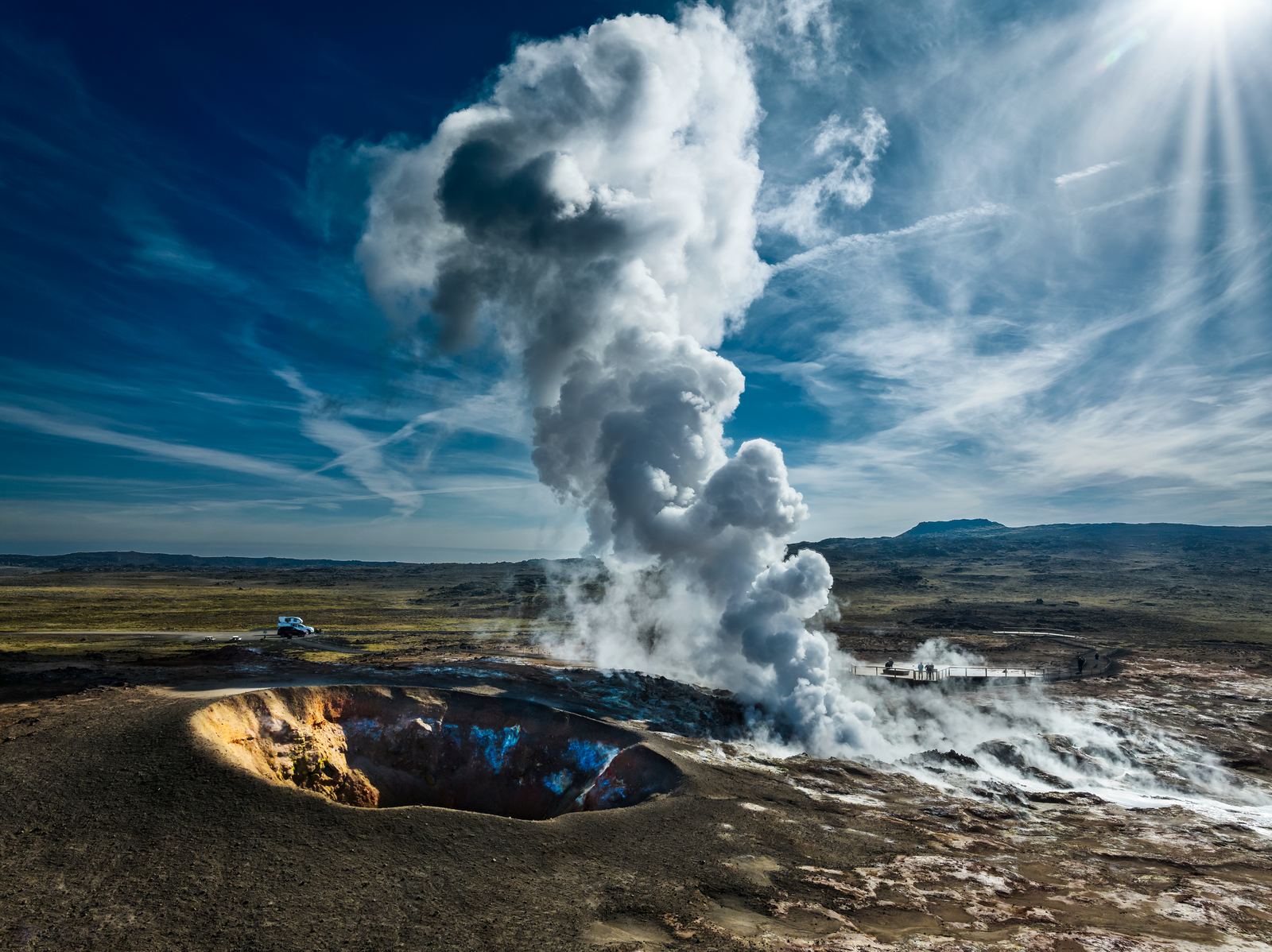
Steam rising from Gunnuhver beneath dramatic clouds08

Gunnuhver

Gunnuhver Hot Springs is a high-temperature geothermal attraction on the Reykjanes Peninsula, known for Iceland’s largest mud pool and powerful steam vents. It’s easy to reach by car, with free parking just off Road 425. Allow 20–40 minutes to explore, or longer if you also visit nearby Reykjanesviti and Valahnúkamöl.

Discover
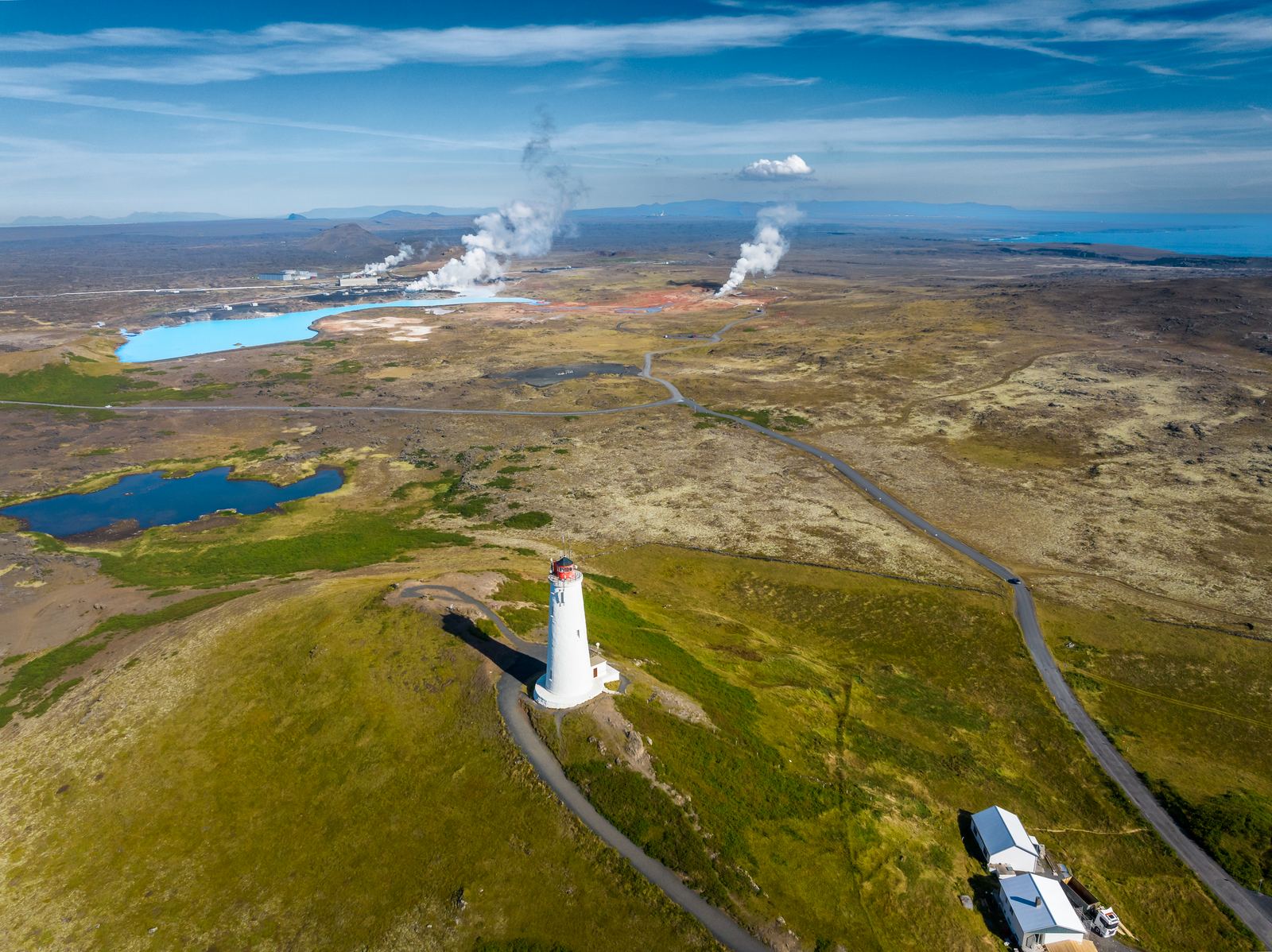
Reykjanes Lighthouse on its hill above the coast10

Reykjanes Lighthouse

Reykjanes Lighthouse (Reykjanesviti) is a historic working lighthouse on the Reykjanes Peninsula, with coastal views and walking trails nearby. It’s free to visit, with paid parking and seasonal visitor services. Allow 30–60 minutes, or longer to explore nearby Gunnuhver and Valahnúkamöl.

Discover
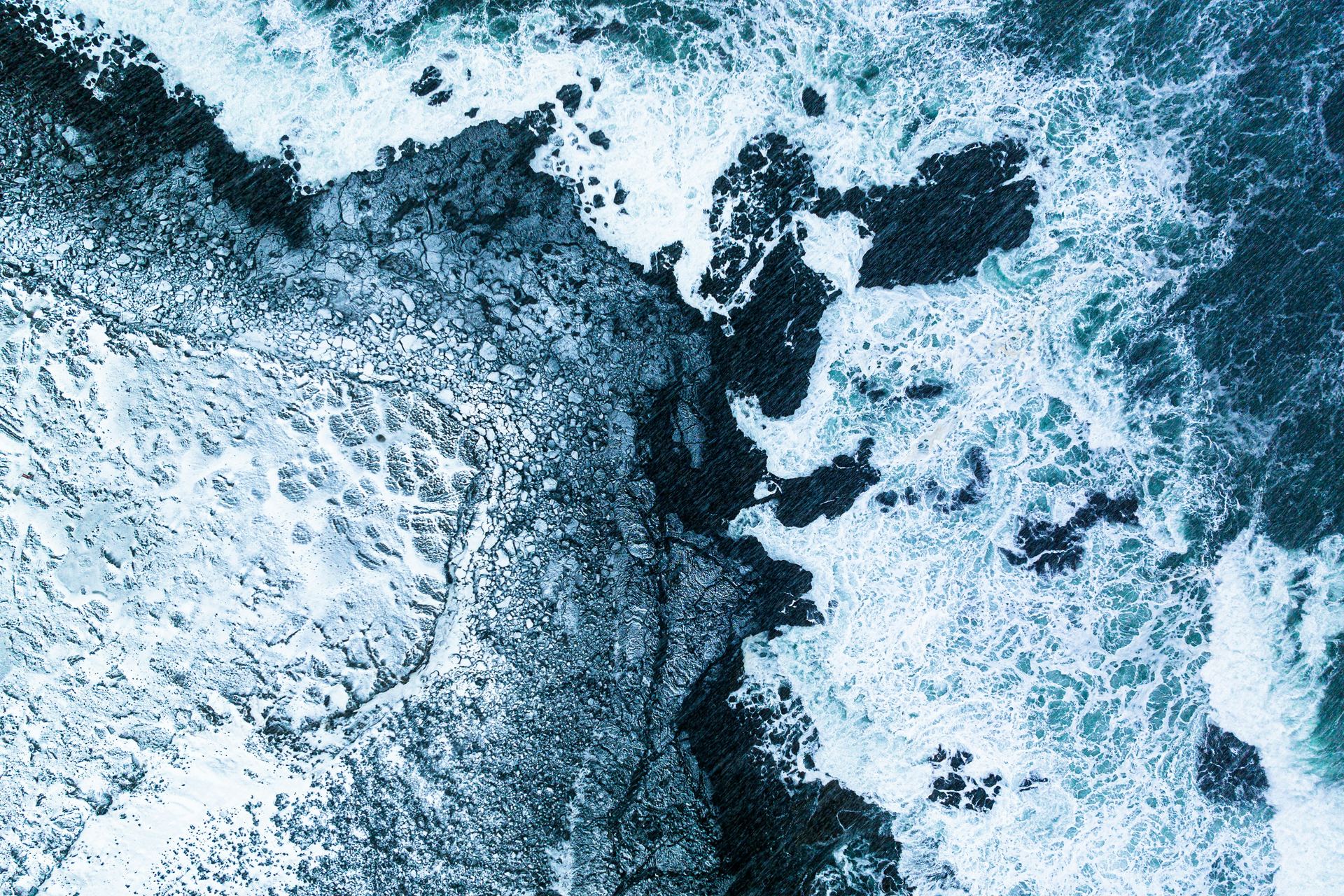
Atlantic waves washing over the rocky shoreline at Valahnúkamöl11

Valahnúkamöl

Valahnúkamöl is a high boulder ridge on the Reykjanes Peninsula, shaped by powerful Atlantic waves. It’s easy to reach by car, with parking beside the coast. Allow 20–30 minutes to explore, or longer to visit nearby Valahnúkur, Reykjanesviti and Gunnuhver.

Discover
Brimketill lava rock pool on the Atlantic coast
  1. Home
  2. Destinations
  3. Brimketill
Stop 07

Brimketill

Brimketill is a natural lava rock pool on the Reykjanes Peninsula, where North Atlantic waves surge over the lava coastline. It’s free to visit, with a car park and viewing platform just a short walk away. Allow around 20–30 minutes and stay within the designated viewing area.

All places Route map

At a glance

Accessibility
Not wheelchair-accessible
Family-friendly
Suitable for children with close supervision
Time needed
20–30 minutes
Walking difficulty
Easy
Facilities
Small free car park, dedicated viewing platform
Seasonality
Year-round weather-permitting

Brimketill

  1. 01What Exactly Is Brimketill?
  2. 02How Was Brimketill Formed?
  3. 03Brimketill is Also Called Oddnýjarlaug
  4. 04What Can You See From the Brimketill Viewing Platform?
  5. 05Can You Swim in Brimketill?
  6. 06Visiting Brimketill Throughout the Year
  7. 07Places to Visit Near Brimketill
  8. 08Before you set off
  9. 09How to Get to Brimketill Lava Rock Pool
  10. 10Parking and Walking to the Brimketill Viewpoint
  11. 11Where Does Brimketill Fit on the Volcano Circle?
  12. 12Route map
  13. 13Frequently asked questions
  14. 14Next stops.

Brimketill is a natural lava rock pool on the southern coast of the Reykjanes Peninsula, just west of Grindavík. Here, Atlantic waves surge over the dark lava coastline and fill a pool carved into the rock over time.

Although Brimketill is a relatively quick stop, there’s more to know before you visit. This guide covers its formation and folklore, what to expect, how to get there, and how to visit safely.

What Exactly Is Brimketill?

Brimketill is a natural pool carved into the lava coastline west of Grindavík. Unlike the hot springs and geothermal pools found elsewhere in Iceland, Brimketill contains cold seawater and is shaped by the ocean. The name roughly translates as “whitewater cauldron”, referring to the foaming seawater that surges into the rocky pool. The effect is especially noticeable when waves are stronger.

Brimketill is located along Road 425 and is part of the Reykjanes UNESCO Global Geopark. A viewing platform overlooks the pool, so you can see it without climbing onto the surrounding lava rocks.

How Was Brimketill Formed?

Brimketill was formed by marine erosion along the lava coastline. The surrounding basaltic lava contains cracks and fractures where seawater can enter.

As waves repeatedly hit the coast, water and compressed air force their way into these cracks. Waves can also carry loose rocks that scrape and wear away the basalt. During colder conditions, water that freezes inside cracks can expand and widen them. Over time, these processes removed sections of the rock and created hollows in the lava, including the pool you see today.

The lava around Brimketill likely dates from the Reykjanes Fires of around 1210–1240. So, while volcanic activity created the lava field, the ocean carved Brimketill itself over time.

Brimketill is Also Called Oddnýjarlaug

Brimketill has also been known as Oddnýjarlaug, meaning "Oddný's Pool". The old name comes from an Icelandic folk tale about a giantess or night troll named Oddný.

According to the story, Oddný lived nearby with her husband, Hróar, and their son, Sölvi. One night, she travelled to the coast to collect a whale carcass. On her way home, she stopped to rest and bathe in Brimketill.

In Icelandic folklore, trolls were said to travel at night because sunlight could turn them to stone. Oddný stayed too long and was caught by the rising sun before reaching home. She was believed to have become a rock pillar that stood near the coast until the sea eventually eroded it away. Brimketill was therefore also known as Oddnýjarlaug, or “Oddný’s Pool.”

What Can You See From the Brimketill Viewing Platform?

The viewing platform overlooks Brimketill and the surrounding lava coastline. From here, you can look directly into the natural pool and see how seawater moves in and out with the waves.

On calmer days, the shape of the pool is easier to see. When the sea is rougher, waves can surge into Brimketill, creating white foam and sending spray across the rocks.

If visibility is good, you may also see Reykjanesviti Lighthouse and steam rising from the Gunnuhver geothermal area in the distance. Look at the rocks below the platform too, where you may spot shells, starfish, or other marine life.

Good to know: Bring a waterproof outer layer even on a dry day. Sea spray can reach the viewing platform when waves are strong.

Can You Swim in Brimketill?

No. Never enter Brimketill or climb down towards the pool. Despite its appearance, Brimketill isn’t a safe natural swimming pool. It’s directly exposed to the North Atlantic, where strong waves and currents can make entering the water extremely dangerous. 

There is no safety supervision at Brimketill, so when visiting, make sure to: 

  • Stay on the designated path and viewing platform

  • Never climb onto the lava rocks around the pool

  • Be careful when the platform is wet or icy

  • Watch for large or unexpected waves

  • Take extra care in strong winds

  • Keep children beside you at all times

  • Follow any closures or warning signs

The best way to experience Brimketill is from above. Leave the swimming for Iceland’s designated pools or geothermal spas, such as the nearby Blue Lagoon.

Visiting Brimketill Throughout the Year

Summer is generally the best time to visit Brimketill, especially if you want easier walking and driving conditions. Longer daylight hours also give you more time to combine the stop with other attractions around the Reykjanes Peninsula. Winter often brings rougher sea conditions, while snow, ice, strong winds, and sea spray can make the walkway and viewing platform more difficult to use safely. 

Late spring and early autumn offer a good middle ground, with plenty of daylight and generally manageable conditions. You can visit Brimketill year-round when conditions allow. However, it’s best to avoid the area during severe coastal storms. Always check the weather and road conditions before setting out.

Places to Visit Near Brimketill

After visiting Brimketill, you can continue along the Reykjanes coast to several nearby geothermal and coastal attractions:

  • Grindavík: Stop for services, food, and a closer look at this historic fishing town on the south coast of Reykjanes.

  • Gunnuhver Hot Springs: Walk through a geothermal area known for powerful steam vents and bubbling mud pools.

  • Reykjanesviti Lighthouse: Visit Iceland's oldest lighthouse site and explore the surrounding coastal landscape.

  • Valahnúkamöl: See sea cliffs, offshore rock formations, and the exposed Atlantic coast near Reykjanes Lighthouse.

  • Bridge Between Continents: Walk across a symbolic bridge spanning a fissure between the North American and Eurasian tectonic plates.

Before you set off

Check road reports, local weather and current site access before travelling.

Local weather

Loading forecast

Reading the sky around this stop…

Icelandic Met Office

Latest road reports

Checking reports for Reykjanes…

Check current access

How to Get to Brimketill Lava Rock Pool

Brimketill is located just off Road 425 (Nesvegur), around 11.5 kilometres (6.8 miles) west of Grindavík. From Grindavík, follow Road 425 west and take the signed turn for Brimketill. A short access road leads towards the coast.

Under normal conditions, you can reach Brimketill in a regular 2WD car, so a 4x4 isn’t necessary.

Note: Road access around the Reykjanes Peninsula can change because of volcanic activity or severe weather. Check the latest updates at SafeTravel.is before setting out.

Parking and Walking to the Brimketill Viewpoint

A small free car park is located close to the coast. From there, it’s only a 1–2 minute walk along a constructed walkway to the viewing platform.

The route begins with a small set of stairs, so the viewing platform isn’t wheelchair-accessible. The rest of the walk is short and easy, with no hiking required. Allow around 20–30 minutes overall to walk to the platform, see Brimketill, and watch the waves.

Note: There’s no visitor centre or other facilities at Brimketill. Plan toilet, food, and petrol stops elsewhere, with Grindavík being the nearest town with a wider range of services.

Where Does Brimketill Fit on the Volcano Circle?

Brimketill is a short coastal stop along the western section of the Volcano Circle Iceland self-drive route. If road access allows, it fits naturally between the Grindavík area and attractions farther west, including Gunnuhver and Reykjanes Lighthouse.

Around 20–30 minutes is usually enough to walk to the viewing platform, see the lava pool, and watch the waves before continuing along the route.

Route map

Brimketill is highlighted. Explore nearby stops and follow the road around the circle.

Calculating the mapped drive…

Explore the circle

Loading the location map…

Brimketill lava rock pool on the Atlantic coast
Lava coast

Brimketill

Brimketill is a natural lava rock pool on the Reykjanes Peninsula, where North Atlantic waves surge over the lava coastline. It’s free to visit, with a car park and viewing platform just a short walk away. Allow around 20–30 minutes and stay within the designated viewing area.

Explore this stop

Frequently asked questions

Yes, Brimketill is worth a short stop for its naturally carved pool, lava coastline, and North Atlantic views. You only need around 20–30 minutes, making it a great stop if you plan to visit the Reykjanes Peninsula.

No, you generally don’t need a 4x4 to reach Brimketill under normal conditions. Always check current road conditions before travelling, especially during winter or periods of volcanic activity.

No. The walkway to Brimketill’s viewing platform begins with a small set of stairs, making it inaccessible to wheelchairs.

No. The viewing platform provides the best view of Brimketill and is only a 1–2 minute walk from the car park.

Wear sturdy shoes and bring windproof and waterproof outer layers when visiting Brimketill Lava Rock Pool. Sea spray can reach the viewing platform, while wet or icy surfaces may become slippery.

Yes, you can visit Brimketill at high tide, as overall sea conditions matter more than the tide alone. If waves or swells are strong, stay on the viewing platform and well away from the water.

Next stops.

Steam rising from Gunnuhver beneath dramatic clouds08

Gunnuhver

Gunnuhver Hot Springs is a high-temperature geothermal attraction on the Reykjanes Peninsula, known for Iceland’s largest mud pool and powerful steam vents. It’s easy to reach by car, with free parking just off Road 425. Allow 20–40 minutes to explore, or longer if you also visit nearby Reykjanesviti and Valahnúkamöl.

Discover
Reykjanes Lighthouse on its hill above the coast10

Reykjanes Lighthouse

Reykjanes Lighthouse (Reykjanesviti) is a historic working lighthouse on the Reykjanes Peninsula, with coastal views and walking trails nearby. It’s free to visit, with paid parking and seasonal visitor services. Allow 30–60 minutes, or longer to explore nearby Gunnuhver and Valahnúkamöl.

Discover
Atlantic waves washing over the rocky shoreline at Valahnúkamöl11

Valahnúkamöl

Valahnúkamöl is a high boulder ridge on the Reykjanes Peninsula, shaped by powerful Atlantic waves. It’s easy to reach by car, with parking beside the coast. Allow 20–30 minutes to explore, or longer to visit nearby Valahnúkur, Reykjanesviti and Gunnuhver.

Discover